
SPAN: Bridging the Gap
Updated: May 4

Who We Are
SPAN is a nonresidential, coeducational program serving troubled youth and their families throughout Alabama using modern educational tools and effective counseling techniques. We accept a wide range of students from a broad referral base that includes local juvenile court systems, local school systems, and many others.
Our Mission
SPAN earnestly seeks to help troubled youth achieve success and become productive adults through education, counseling, and positive influences within their own communities.
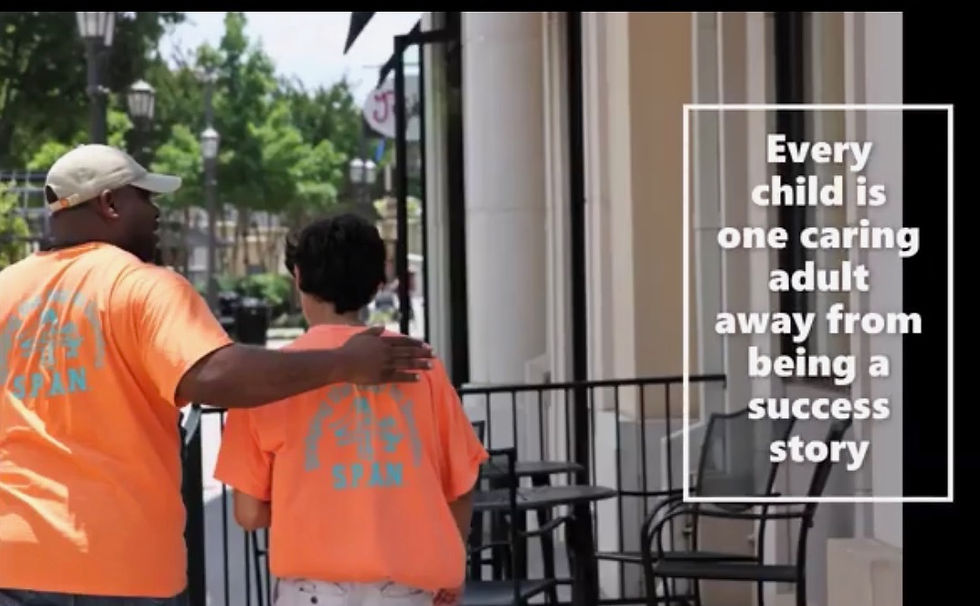
I was introduced to SPAN by a Board Member who invited me to their annual '70s fundraiser. Beyond the fun of the dance, I also enjoy their boxed lunches. I am always impressed by the kids who greet and serve us, each displaying perfect manners, trained by an organization that truly cares about the young people they support. Present and directing, one person stands out with pride: Anthony Brooks, Program Director of SPAN.
I requested an interview with Mr. Brooks to learn more about this remarkable program. To his credit, he indicated this interview should not focus on him, but should highlight the SPAN program. Garden Spices is proud to showcase SPAN's goals, practices, and accomplishments. Gate open - Victorine
Edward E. Earnest, now deceased, created the program 40 years ago, driven by his vision to provide Special Programs for Achievement. Hence, SPAN (including a network) was born. Although there are six (6) to seven (7) programs throughout the state of Alabama, SPAN has been serving Lauderdale County for eighteen (18) years. The participants are referred by the court and school systems, and the program maintains partnerships with the city and county systems and with resources that promote career awareness.
I asked Brooks about his career as Program Director with SPAN, and he explained that directing the program doesn't rely on his title; he discerned, "This was a calling," and went on to say, "I love working with our kids, and I can reach them through structure, truth, and engagement." SPAN is his commitment to living/giving life. The program serves kids who are thirteen (13) to eighteen (18), and Brooks noted that "each experience is different."
Brooks noted that the average stay for the participants is six (6) to eight (8) months, and that the "lightbulb goes off" moment is unique to each participant's experience in the program. "They peak differently," he determined, and each experiences their own time to "figure (things) out." The staff defers to the kids' well-being. Brooks recounted, "As the old saying goes, 'If we get the point, we don't care who gets the credit." To that end, the program also involves the community.
Left to right: Valentine's Day, Bear Creek Collaborative, Graduation
Organizations like the court system, YMCA, Health Connect, Riverbend, etc., are resources for the program, and Juvenile Probation Officers can "change a lifestyle" and the stories of many troubled kids. I asked Brooks about the role of the parents, and he explained that this is the most important partnership.
"There is no pixie dust to what we do," notes Brooks. "My grandmother said, “There will be no true relationship until you have fellowship. Relationship-building is what we do." The parent is SPAN's most valuable weapon in the transformation process because buy-in from all parties is required. "The parents set the temperature for change to actually occur." Brooks notes, "We know that we are temporary; the parents will be there forever," Brooks determined, "We know the child can come back any time, and that we can continue the relationship and be great friends, and possibly grow into colleagues." Brooks realizes that SPAN is just temporary and that internal change for the kids happens when they "change the temperature."
Every situation is a new case. A kid can be defiant, have school problems, or have issues with mom and dad. SPAN develops a vision for what the kid can be, and when both parties agree, they can build from it. "We start from there," notes Brooks, "then we plan with framework, preparation, and vision." They work on their goals daily. "This gives the kids an opportunity to prove to themselves through action that they can reform and make better decisions and choices about people they desire to hang around." SPAN operates similarly to a school:
They start the day with breakfast
Then, in a classroom setting with teachers, offering work to suit each grade level
Counseling and education start and focus on behavior. Brooks noted that the kids have various issues, and SPAN caters to each child. "Some deal with anger issues, drugs, or being bullied," he indicated. "We provide a framework for the individual." From the outset, SPAN develops a "social summary" for the child, then observes and begins relationship-building. They show the kids that there is a "better option" and get them to commit to partnering with SPAN.
Lunch
Then, 21/2 hours of counseling focusing on behavioral issues, jobs, rewards, and consequences rather than punishment. "If you do this (whatever it is), this is the outcome."
SPAN understands learning is also outside of the classroom. "We even teach them about the economy. They have "The Store," and they can earn points for shopping...a token economy. The lesson is that if you go to work, you reap a paycheck." They also role-play, "rehearsing for life (changes)." Brooks notes, for example, "They learn that you won't be able to work if you don't have a good attitude. They learn consequences and rewards."
The students engage with fundraising events by setting them up and assisting where needed. They also go on field trips, providing some kids with "first-time experiences."
Students also have hands-on activities. "They learn that through working together, great things happen," notes Brooks. They discuss "forever plans. "Some students receive internships, and if they desire to go to college or trade school, SPAN finds advocates to help." Brooks does not forget and thanks their Advisory Board, which supports SPAN's endeavors.
When asked about core practices, Brooks pointed out "goal-setting with accountability and vision-building with intentional planning." These practices seem sufficient to produce promising futures for SPAN participants.


Victorine
I am the founder, Editor-in-Chief, and publisher of Garden Spices Magazine, an online publication cultivating a global perspective through essays, art, cuisine, and design. Originally from Chicago and now based in Alabama—where diversity is often under-celebrated—I was moved to create a platform where creative voices are not only heard, but honored.
Beyond publishing, I serve as an elder in Project Say Something, a racial justice initiative, and as Emeritus Pastor of Living Spirit Church, Alabama, a New Thought ministry. Both reflect my commitment to inclusive spirituality and advocacy for justice.
I also make jewelry, teach African Dance for seniors, and—when the right jam hits—am the first to start a Soul Train line.


Comments